




THE IMPORTANCE OF MOTHS IN OUR LANDSCAPES
When darkness falls on our gardens and we settle in for the night, we may think that the creatures around us all do the same - but nothing could be further from the truth. Under the night sky, our landscapes are filled with living things that are specifically adapted to the dark hours.
Although often unnoticed by humans, moths are an integral part of the complex living systems that surround us. In recent years, public appreciation for day-flying pollinators such as bees and butterflies has risen, but our gardens can also support a host of native moths that are perhaps even more critical to our local ecology. Although we might have heard how a very few ( often non-native ) moths can be destructive, most moth species are highly beneficial.

HABITAT MATTERS
Moths have existed for 190 million years and likely evolved well before day-flying butterflies. There are more than 180,000 species found worldwide, with more than 500 species being found in Pennsylvania. Across the world, over 50% of all population takes place at night, much of it provided by moths.
The wealth of biodiversity plays a critical role in our local food webs. Adult moths and their caterpillars are eaten by mammals such as bears, bats and skunks who consume hundreds, if not thousand each night; owls and passerines ( perching birds such as songbirds ) rely on this plentiful food source to raise their young and fuel migratory journeys. Frogs, snakes and salamanders eat moths and their larva, and even other insects prey upon these abundant creatures.
But sadly, moths are in decline across Pennsylvania due to habitat loss, misuse of pesticides and climate change.

HOW TO SUPPORT NATIVE MOTHS
If you would like to support native moths in your landscape, plant and care for native trees which provide food and shelter for this large group of insects.
For example:
One oak tree can support hundreds of species by providing leaves for larva to feed on - and do not be concerned that these native moths will devour your landscape trees - with so many predators, native moth species are kept in check as they nibble a few leaves from large trees. Moths that rely on oak trees include some of the largest in our region, such as the Polyphemus moth.
Hickory trees and oaks provide the leaves for the larva of the large and beautiful Luna moth; like several other species, the adult Luna moth does not even feed in as it only lives for a short time as it seeks out a mate.
Tulip trees ( often called "tulip poplar"), Eastern redbud, hackberry, American plum and willow are often all important food for developing caterpillars; local black cherry trees
( Prunus serotina ) alone support more than 400 moths and butterflies.
When moths disappear from a place, the loss does not stop with moths. It moves outward into the diets of birds, bats, amphibians, and many other animals.

HOW TO SUPPORT LOCAL MOTH POPULATIONS
Gardeners can also support local moth populations by:
Cutting back, or better yet, eliminating pesticide use. If you spray chemicals to "control" an insect that you see as a pest, you likely will kill far more of these beneficial species as an unintended consequence.
Eliminating outdoor lighting that confuses moths, who are used to navigating only by moonlight, and are lured to exhaustion and in many cases, to their death, by streetlights and porch lights. If you can't eliminate outdoor lights, consider installing shaded lights, selecting a warmer bulb ( that is less confusing and less attractive to moths ), or using low-watt solar lights or lights that only come on when motion is detected and light is necessary.
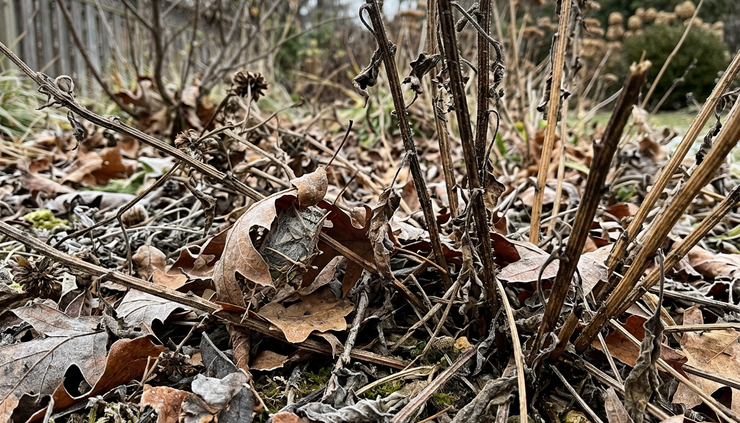
It is also important to become comfortable with leaving the fallen leaves in our landscapes to provide safe overwintering habitat. If you can't leave fallen autumn leaves all over your yard, consider defining some particular spaces, such as mulched areas around trees and shrubs, where leaves can remain, protecting the over-wintering larva of local moth species.
Seeing moths changes how we value the night
Remember - nature continues to work for all of humanity, even during the "nightshift."


Comments