




Embracing the good: why Unfairly Branded Weeds Are essential late-bloomers

There are several highly valuable garden plants that contain the word "weed" in their common name: Milkweed, Ironweed, Jewelweed and our featured Plant of the Month for July ( https://www.moontownshipgardenclub.com/post/july-s-plant-of-the-month-joe-pye-weed ) Joe Pye Weed. Some gardeners may be put off by these names as often the word "weed" means an undesirable plant - but some plants that have "weed" in their names can be valuable additions to our landscapes and habitat gardens.
Who names these plants as "weeds"?
The term "weed" may have originated from the Old English term "woed," which referred to and "herb or plant that was not cultivated or valued for its use or beauty." As Europeans and other settlers explored North America it is likely that many news species of plants that were unfamiliar were thought of as "weeds". However, each of the plants above that include this unfortunate term in their name were highly valued by indigenous peoples - and are also extremely important components of our local ecosystems:
Several Milkweed ( Asclepias ) species in western PA provide not only critical mid and late-summer nectar sources for pollinators, but also the only larval food source for the migratory monarch butterfly. There are several species common to our area, including the 18-24 in orange Butterfly Weed ( A. tuberosa ), the tall common Milkweed
( A. syriaca ) and the more demure, pink Swamp Milkweed ( A. incarnata ).

The orange blooms of the Jewelweed attract hummingbirds and a host of other pollinators throughout the late summer with the sweet nectar in he dangling pouch-like flowers.

The huge, late-summer-blooming flower heads of Joe Pye Weed ( Eurochium ) entices a host of nectar-loving insects, while its dry seed heads are an important food of local and migratory birds.
The large, rich purple flowerheads of Ironweed ( Vernonia noveboracensis ) are a critical late-summer nectar source for many species of native bees and butterflies, including the migratory monarch. The seeds are used throughout the fall and winter by many birds and small mammals. Its common name comes from the fact that its sturdy stems can stand throughout the winter winds and weather.
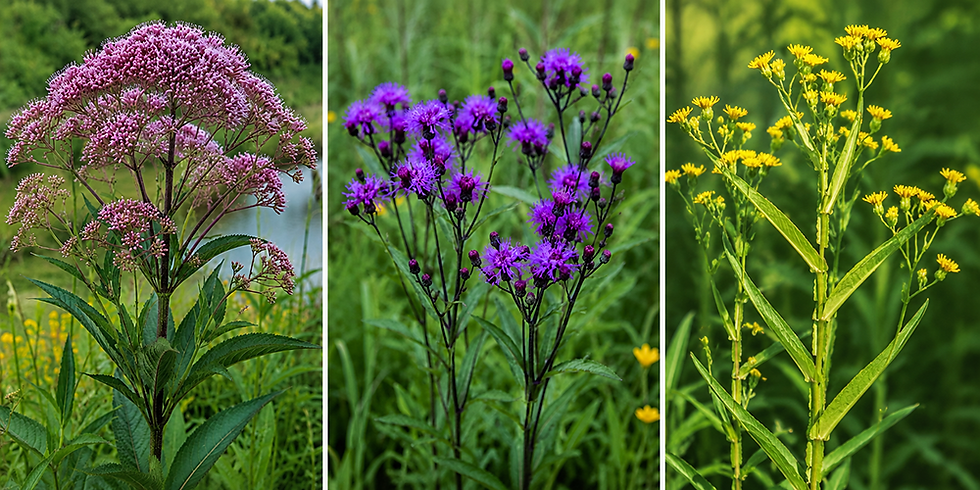
Another "weed" or wildflower that is often overlooked for its benefits in the ecosystem is the Yellow Wingstem or Yellow Ironweed ( Verbesina alternifolia ). Frequently seen along highways and in meadows, these voracious growers not only support wildlife, enhance the soil, but provide a yellow burst in gardens at a time when other plants are fading. It too provides an excellent late-summer nectar source for native bees and butterflies. When allowed to flourish it can also be used to stabilize soil and control erosion.
an additional little-known power of these stunning "weeds":
Many of our tall and stately native plants, like Ironweed and Joe Pye, also acts as a critical over wintering habitat for tiny insect larva that take up residence in their sturdy stems. By leaving your native plants up all winter you provide shelter for the overwintering native bee species and many types of caterpillars while also adding "winter interest" to your view as the resilient stems and seed heads poke above even the deepest of winter snows.
More Functional and aesthetic value
Many of these plants are actually pioneers in disturbed soil. They prepare the ground for other plants by improving soil structure and adding organic matter. Ironweed for example, with its deep fibrous root systems help break up clay and aerate packed dirt. This improves water infiltration and root growth for neighbors. It also brings up deep soil nutrients, and its natural leaf drop contributes organic matter to enrich the topsoil.
The intense colors of these plants not only attract stunning wildlife but provide vertical beauty well into the fall. These strong growers can add a lot as contributors to a long blooming garden.


Comments