




July's plant of the month - joe pye weed
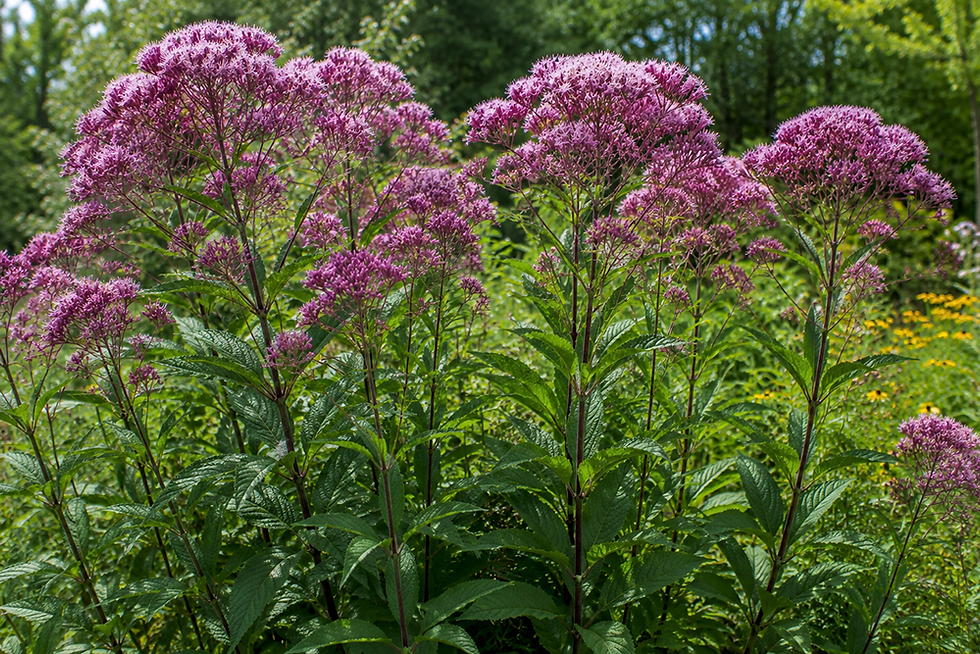
As the hot months of summer set in and many spring perennials are done with their bloom, the striking Joe Pye Weed is just coming into flower. Don't be turned away because the term "weed" is used in this plant's name - Joe Pye is our featured plant of the month not just for its importance to wildlife, but also because it creates a stunning presence in your border with it's vanilla-scented lush dusty-pink to mauve-purple flower heads that can range from 6 to 15 inches across.
The name "Joe Pye" is believed to come from a Native American Mohican herbalist named Joseph Shauquethqueat (c. 1740-1785) who used the plant for medicinal purposes.
Why joe-pye in your landscape?
Two species of Joe Pye common to western Pennsylvania belong to the genus Eurochium
(formerly Eupatorium). Sweet Joe Pye (E. purpureum) and Spotted Joe Pye (E. maculatum) both grow from 5 to 8 feet tall and bloom from July to September.
Use in Landscape:
Creating a dazzling display when grouped, they are equally eye-catching as a
singular planting. A must for any naturalistic or meadow garden, they are remarkable
in any setting - but consider planting Joe Pye towards the back of a traditional perennial border because of its impressive height. You can also shorten their height slightly by pruning the stems of plants back in early spring. Consider leaving the stems and seedheads up through winter for visual interest and to encourage seed dispersal.
Wildlife support:
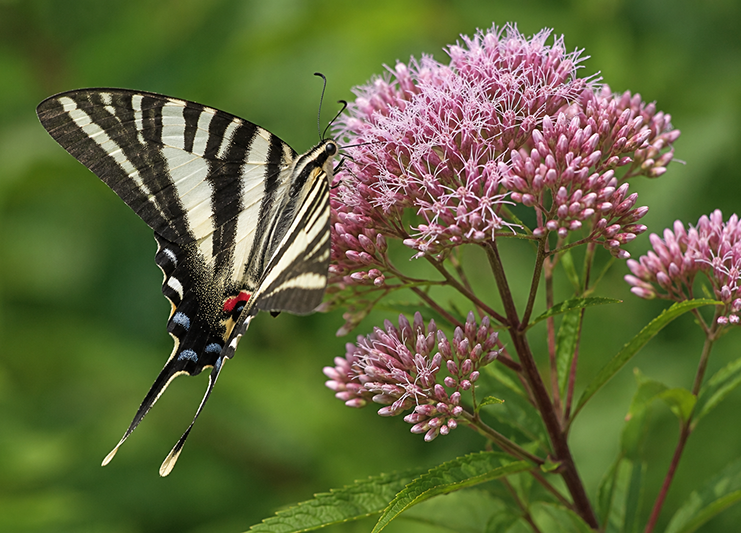
Joe Pye is one of the most ecologically important flowers in the mid and late summer landscape. Their nectar is a critical summer and early fall food source for pollinators, while the seed heads provide food for many native and migratory birds. Consider leaving the stems standing throughout the winter to provide homes for over-wintering pollinators and other insects.
Traditional medical or culinary uses:
Native Americans used this plant medicinally to treat several illnesses, although recent tests have shown that ingesting larger quantities can cause injury: Remember, always consult your physician before using any "herbal remedy."
Tips on growing joe pye in your garden
Location and Soil Preparation:
Joe Pye plants, which are found naturally in bottomlands, thrive in sun gardens with
soil that holds moisture - they even tolerate occasional flooding, making them a wonderful addition to a rain garden or "soggy spot" in your yard.
Propagation/Spacing:
Space nursery-grown plants 3 feet apart, as they will fill in over several growing seasons. Divide plants in the fall after they have been in place several years and share with friends and neighbors.
Growing from seed:
Joe Pye can be successfully grown from seed. They require a cold stratification period of 30 - 60 days. Direct sow them by scattering the seeds in late fall/early winter by pressing them into the soil to experience winter cold and light. Seeds are available from many reputable suppliers.
Share in the conversation
Tell us if you planted these beautiful native plants in your landscape:
Post your photos on social media and be sure to tag the Moon Township Garden Club


Comments